Does Riverview, FL Tap Water Have PFAS?
Quick Summary: Low levels of PFAS have been detected in regional water sources supplying Riverview, FL, though local tap water currently meets all federal and state safety standards. Hillsborough County Utilities and Tampa Bay Water continue expanded testing and treatment planning, while many homeowners choose in-home filtration for added peace of mind.
If you live in Riverview, FL, it’s normal to ask what’s in your tap water. With growing national attention on “forever chemicals,” it’s understandable to want clear, local answers. The short answer is yes — PFAS have been detected at low levels in Hillsborough County drinking water sources. While detected levels meet current federal and state safety standards established under the Safe Drinking Water Act, PFAS presence remains an ongoing concern due to their long-term impacts on environmental health and public safety.
Because PFAS move through the water cycle and can persist for decades, even low-level detections have prompted closer monitoring across Florida and the United States.
Here’s what you need to know about PFAS in Riverview and the Tampa area, how Hillsborough County is monitoring water quality, and what homeowners can do to further reduce potential exposure.
How Can Riverview, FL Homeowners Filter Out PFAS?
Riverview homeowners looking to reduce PFAS exposure can start with a professional in-home water test to see exactly what’s coming out of their taps. While municipal water reports provide regional averages, in-home testing offers personalized insight into household water quality.
Many homeowners reduce PFAS by installing advanced filtration solutions, such as reverse osmosis drinking water systems and whole-home filtration. Reverse osmosis systems are commonly installed under the sink and use a specialized membrane to remove up to 99% of PFAS and other contaminants, delivering cleaner, better-tasting water for drinking and cooking.
How to Check PFAS Results in Riverview, FL
Here are two simple ways to find out how much PFAS may be in your tap water:
1. Review Hillsborough County’s Annual Water Quality Report (Consumer Confidence Report)
Each year, Hillsborough County Utilities publishes a Consumer Confidence Report (CCR), also referred to as the Water Quality Report, that summarizes:
- Where Riverview’s drinking water comes from
- What contaminants were tested
- Detected contaminant levels
- Compliance with EPA drinking water standards
- Updates on PFAS testing programs
This Water Quality Report is the primary source of official water quality data for Riverview residents.
2. Visit Tampa Bay Water’s Water Quality Testing Resources
Because Riverview receives water from Tampa Bay Water, residents can also access:
- Regional PFAS testing summaries
- Treatment process explanations
- Ongoing water quality improvement updates
- Regulatory compliance disclosures
These reports provide broader regional context for PFAS monitoring across Hillsborough County and beyond.
Is Riverview’s Drinking Water Tested for PFAS?
Testing for PFAS in Hillsborough County
Yes — Riverview’s tap water is actively tested for PFAS as part of Hillsborough County Utilities and Tampa Bay Water’s regional monitoring programs operated by local water utilities and water treatment plants.
Recent drinking water testing conducted by Hillsborough County Utilities and Tampa Bay Water confirms that low levels of PFAS compounds have been detected in regional water sources supplying Riverview, FL residents.
Riverview receives its drinking water from Tampa Bay Water (TBW), which supplies treated water to Hillsborough County and surrounding communities using a combination of surface water, groundwater resources, and desalinated seawater. Much of this surface water comes from regional reservoirs and rivers, carefully managed to maintain high water quality before treatment. Hillsborough County Utilities works in partnership with TBW and other regional water utilities to monitor water quality, collect laboratory water samples, and comply with EPA drinking water regulations and evolving health advisories.
During 2023–2024, Hillsborough County Utilities participated in the U.S. Environmental Protection Agency’s (EPA) 5th Unregulated Contaminant Monitoring Rule (UCMR 5) program, which required testing for 29 different PFAS compounds. This nationwide study used advanced analytical methods to better understand PFAS occurrence, support future health advisories, and guide new regulations.
How Are Riverview & Hillsborough County Monitoring PFAS?
Hillsborough County Utilities and Tampa Bay Water are taking proactive, science-based steps to monitor, manage, and reduce PFAS in regional drinking water supplies, including those serving Riverview, FL.
As part of a coordinated regional approach, local water authorities are actively:
Conducting Expanded PFAS Testing
Hillsborough County Utilities is performing routine and expanded laboratory testing for PFAS compounds across multiple water systems. This testing helps identify trends, track long-term changes, and ensure compliance with evolving federal regulations.
Participating in EPA Monitoring Programs
During 2023–2024, Hillsborough County participated in the EPA’s Unregulated Contaminant Monitoring Rule (UCMR 5) study, which required utilities nationwide to test for 29 PFAS compounds. The data collected supports national research, helps shape future regulations, and ensures that regional water systems stay aligned with the latest public health guidelines.
According to a report from WUSF, Tampa Bay Water — the regional supplier for Hillsborough, Pinellas, and Pasco counties — has received a roughly $21.7 million settlement in a class action lawsuit against manufacturers of “forever chemicals,” including PFAS, after joining the litigation in 2020. The settlement could help offset future costs of PFAS sampling, testing, and potential treatment of drinking water sources serving the Tampa Bay region, including Riverview, and reflects ongoing efforts by local water authorities to address contamination from these compounds.
What Regulations Say About PFAS
The Safe Drinking Water Act gives the EPA the authority to establish enforceable Maximum Contaminant Levels (MCLs) for pollutants in public water systems. In 2024, the EPA finalized limits for several PFAS compounds: 4 parts per trillion (ppt) for PFOA and PFOS, and 10 ppt for PFNA, PFHxS, and GenX chemicals.
In Florida, the Department of Environmental Protection uses Surface Water Screening Levels and Provisional Soil Cleanup Target Levels to guide PFAS remediation efforts. Additionally, under Superfund law, PFAS can be classified as hazardous substances, which would hold polluters accountable through the Toxics Release Inventory.
What Are the EPA Limits for PFAS?
In April 2024, the U.S. Environmental Protection Agency (EPA) issued the first-ever national drinking water standards for PFAS, setting extremely low maximum contaminant levels (MCLs) for several of the most studied PFAS compounds. These new standards are designed to reduce long-term exposure and protect the health of public water systems.
Why Are PFAS a Concern in Tap Water?
PFAS (Per- and Polyfluoroalkyl Substances) are a group of man-made environmental chemicals used since the 1940s in everyday products like:
- Non-stick cookware
- Water-resistant clothing
- Food packaging
- Carpets and upholstery
- Firefighting foam
- Industrial coatings
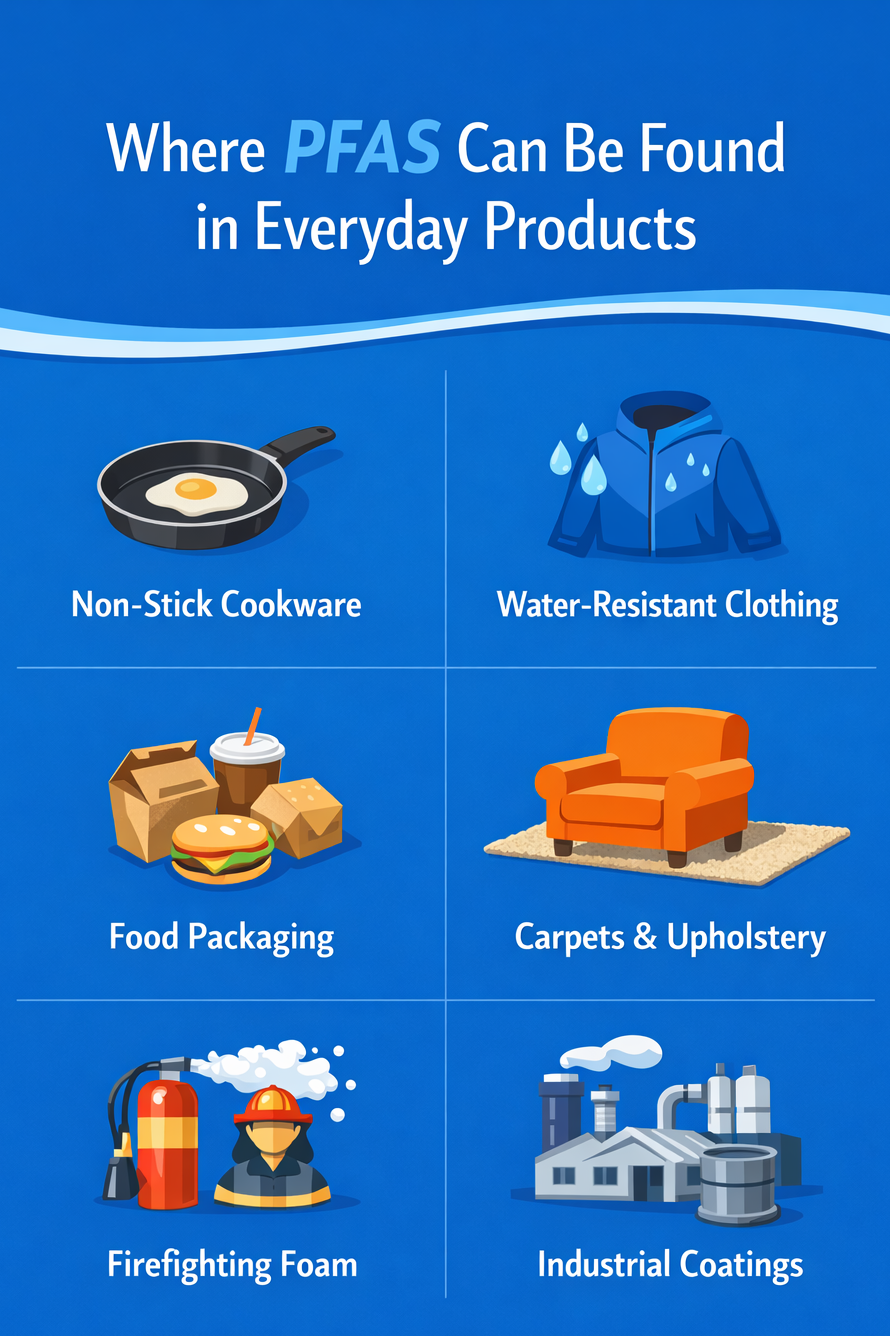
They’re often called “forever chemicals” because they break down extremely slowly and can accumulate in water, soil, and the human body over time. Many PFAS fall into the category of unregulated compounds, meaning they were widely used before enforceable drinking water limits existed.
Culligan starts with a free in-home water test to confirm what’s coming out of your faucets and identify exactly what can be improved. Our local water experts then recommend customized water filters and treatment solutions tailored to your home, delivering cleaner, better-tasting water from every tap.
What Recent Tampa Bay PFAS Research Means for Riverview Residents
Recent research from universities in the Tampa Bay region has expanded the discussion around PFAS beyond drinking water alone. Studies sampling bay water, sediment, and certain fish species have found elevated PFAS concentrations in parts of Old Tampa Bay and surrounding areas.
It’s important to understand what this means, and, what it doesn’t mean.
Environmental testing of bay water and marine life is different from regulated testing of treated municipal drinking water. Public water systems must meet EPA drinking water standards before water reaches homes in Riverview. Those standards now limit certain PFAS compounds to 4 parts per trillion (ppt), one of the strictest thresholds ever established for drinking water.
PFAS in Bay Water vs. PFAS in Tap Water
Researchers have documented PFAS accumulation in Tampa Bay sediments and fish, especially near urban and industrial areas. Some fish species have shown higher concentrations, which has prompted additional monitoring and public health discussion.
However, surface water and marine sampling does not directly reflect the quality of treated drinking water delivered to Riverview homes. Municipal utilities undergo multiple treatment steps and ongoing compliance testing before distribution.
That said, the presence of PFAS in the broader environment reinforces why long-term monitoring and proactive filtration matter.
Why “Meets Standards” Doesn’t Always Mean Zero PFAS
The EPA’s standards regulate PFAS at incredibly small concentrations — measured in parts per trillion. Even when a water system meets federal limits, trace amounts may still be detectable.
For some Riverview homeowners, the decision to install home filtration isn’t about a violation. It’s about adding another layer of reduction, especially given how persistent PFAS are in the environment.
Advanced reverse osmosis systems and properly designed activated carbon systems can significantly reduce many PFAS compounds at the tap, helping homeowners further limit exposure from drinking and cooking water.