Does Lakeland, Florida Water Have PFAS?
Quick Summary: Lakeland, Florida’s drinking water comes from the Floridan aquifer and is treated through local water plants. While official water quality reports don’t list PFAS, the city has been linked to a $14.6 million PFAS settlement and is required to test for these “forever chemicals” under new EPA rules. PFAS are linked to serious health risks like cancer, thyroid disease, and reduced immune response, and they persist in the environment for decades.
Residents of Lakeland, Florida often ask: Does my drinking water contain PFAS? These so-called “forever chemicals,” formally known as per- and polyfluoroalkyl substances (PFAS), have become a major public health issue in the United States. Because they don’t break down in the water cycle, PFAS persist in surface water, groundwater resources, soil, dust particles, and even rainwater samples.
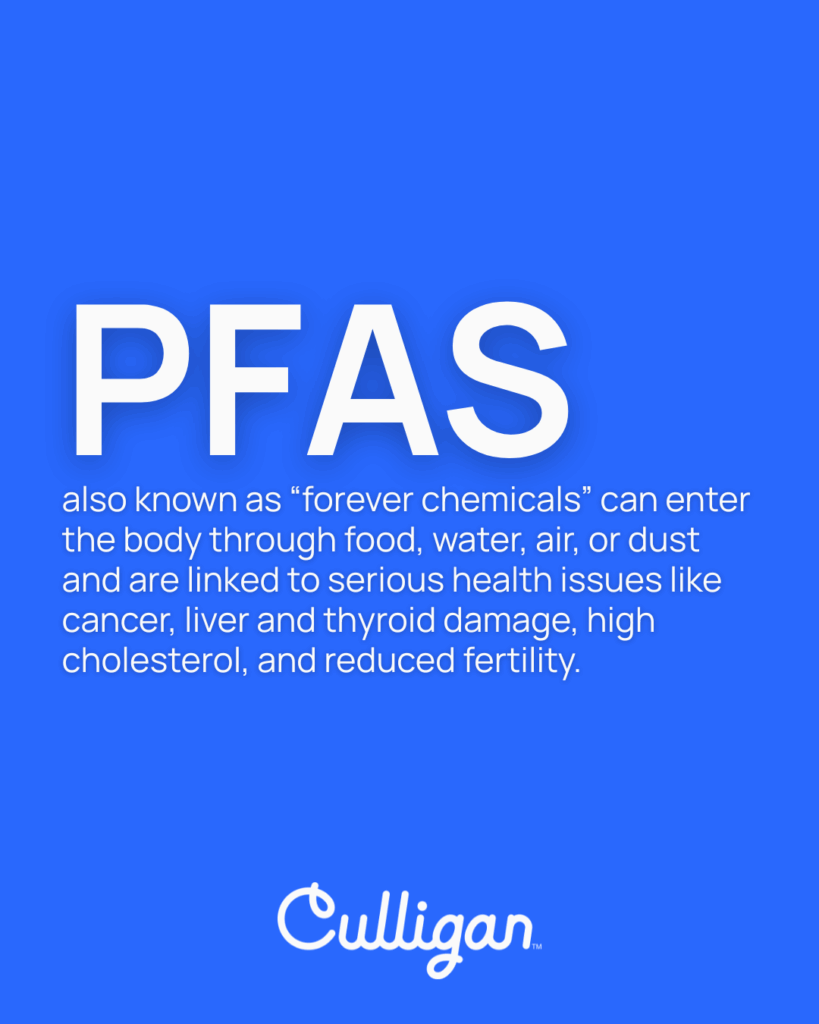
In recent years, the U.S. Environmental Protection Agency (EPA), the Florida Department of Environmental Protection (FDEP), and independent groups like the Environmental Working Group (EWG) have raised alarms about the widespread presence of PFAS in public water systems. These compounds are linked to cancer cases, reduced vaccine effectiveness, thyroid disease, and other health hazards, prompting stricter PFAS regulations and lawsuits against chemical manufacturers.
So what does this mean for Lakeland? Let’s explore the data, health concerns, and what steps homeowners can take.
PFAS don’t break down, once they’re in your water, they’re in your body.
Lakeland’s Drinking Water Sources
Lakeland relies heavily on the Floridan aquifer, a vast groundwater resource beneath Florida, accessed through municipal wells. According to Lakeland’s Water Utilities and its most recent Water Quality Report, water is pumped from 19 wells, then treated at the T. B. Williams and C. W. Combee water treatment plants. Treatment methods include lime softening, filtration systems using anthracite and sand, and chlorination before distribution.
While freshwater springs and Florida springs like Silver Springs are celebrated for their clarity, they too have been found to contain PFAS in water samples. This shows that even aquifer-fed systems like Lakeland’s are not immune. PFAS contamination has been traced to soil and groundwater contamination at hazardous-waste sites, firefighting training areas, wastewater treatment facilities, drycleaning solvent spills, and textile manufacturing facilities across the state.
PFAS in Florida: Context and Hotspots
Florida has been a focal point for PFAS due to its many military installations and airports where firefighting foams (fire suppressant foams) were used. At MacDill Air Force Base in Tampa, PFAS levels in water samples exceeded safe thresholds. In Pembroke Pines, testing also revealed concerning contamination levels in public well systems.
Citizen-scientist volunteers, the University of Florida, and independent labs like the Bowden Research Lab have contributed to sampling efforts across the Tampa Bay region and Central Florida. Studies using analytical methods like ultra-high performance liquid chromatography-tandem mass spectrometry (UHPLC-MS/MS) detect PFAS at very low detection levels in environmental matrices (soil, groundwater, surface water).
Groups like Clean Cape Fear in North Carolina have drawn attention to PFAS contamination from the Chemours Company’s Fayetteville plant in the Cape Fear River. Though outside Florida, these cases highlight how PFAS from textile manufacturing and industrial pollution sources can travel long distances through northern currents and atmospheric pollution research has shown PFAS in dry deposition and dust particles far from their origin.
Does Lakeland’s Water Have PFAS?
Here’s the complicated truth: Lakeland’s official drinking water quality reports do not list PFAS detection results. However, city officials have publicly acknowledged Lakeland may accept a $14.6 million PFAS settlement from 3M and DuPont. This strongly suggests PFAS have been identified in water supply facilities or the distribution system, even if drinking water standards have not yet been exceeded.
Under the EPA’s UCMR 5 (Unregulated Contaminant Monitoring Rule 5), utilities like Lakeland are now required to collect water samples and test for 29 different PFAS compounds between 2023 and 2025. These results will reveal whether Perfluorooctanoic acid (PFOA), Perfluorooctane sulfonate (PFOS), and other toxic fluorinated chemicals are present in the water systems serving the city.
The absence of PFAS data in published reports doesn’t equal absence in the water. It may simply reflect testing cycles or delays in disclosure.
PFAS Health Concerns
The National Institute of Environmental Health Sciences (NIEHS) and the Harvard School of Public Health have documented associations between PFAS exposure and:
- Kidney cancer, testicular cancer, and other cancer incidence tracked by the Surveillance, Epidemiology, and End Results Program (SEER)
- Developmental effects in infants and children
- Impaired immune response and reduced vaccine effectiveness
- Ulcerative colitis and thyroid dysfunction
- Elevated cholesterol and cardiovascular risks
Because PFAS remain in the body for years, even trace contamination levels in drinking water matter for long-term public health.
What Regulations Say About PFAS
The Safe Drinking Water Act empowers the EPA to set enforceable Maximum Contaminant Levels (MCLs) for pollutants in public water systems. In 2024, the EPA finalized rules setting limits of 4 parts per trillion for PFOA and PFOS and 10 ppt for PFNA, PFHxS, and GenX chemicals.
The Florida Department of Environmental Protection has adopted Surface Water Screening Levels and Provisional Soil Cleanup Target Levels to guide PFAS cleanup. Under Superfund law, PFAS may be designated as hazardous substances, which would hold polluters liable under the Toxics Release Inventory.
Professional organizations like the Water Works Association and the Keck School of Medicine emphasize that meeting legal limits may not equate to drinking water safety, since federal health-based drinking water standards often lag behind the latest science.
Testing & Treatment Options for PFAS in Tampa
Residents of Lakeland can take action today, even before full municipal upgrades:
- Water Testing Request PFAS results from Lakeland Water Utilities or order an independent water test through certified labs. Citizen-scientist efforts and the interactive PFAS map published by EWG help highlight contamination sites.
- Filtration Systems
Culligan Whole House Water Filters can reduce PFOS and PFOA by 99% at levels up to 1,500 parts-per-trillion (ppt) to <1 ppt. Certified to NSF/ANSI 58 Total PFAS-2022 set by the WQA (Water Quality Association). Other systems only have NSF 58 PFOA and PFOS certification and reduce to <70 ppt.
The Bottom Line for Lakeland
So, does Lakeland water have PFAS?
- Yes, at some level. Lakeland officials are discussing settlement money from PFAS lawsuits, and under UCMR 5, PFAS sampling is now required.
- No, not yet at enforceable violation levels. The city reports compliance with current drinking water standards under the Safe Drinking Water Act.
- Health concerns remain. Even low contamination levels may pose long-term risks, including cancer incidence and other chronic effects.
For now, the best steps for residents are:
- Stay informed through the city’s Water Quality Annual Reports and the EWG interactive map.
- Consider home water filtration with reverse osmosis or activated carbon.
- Support regulatory measures that hold polluters accountable and push water treatment plants to adopt modern PFAS removal technologies.
Lakeland’s wells in the Floridan aquifer have long been a trusted source of clean water, but the rise of PFAS has changed the landscape. While the city’s public water systems remain compliant on paper, the science tells us “compliant” doesn’t always mean safe drinking water.